About me
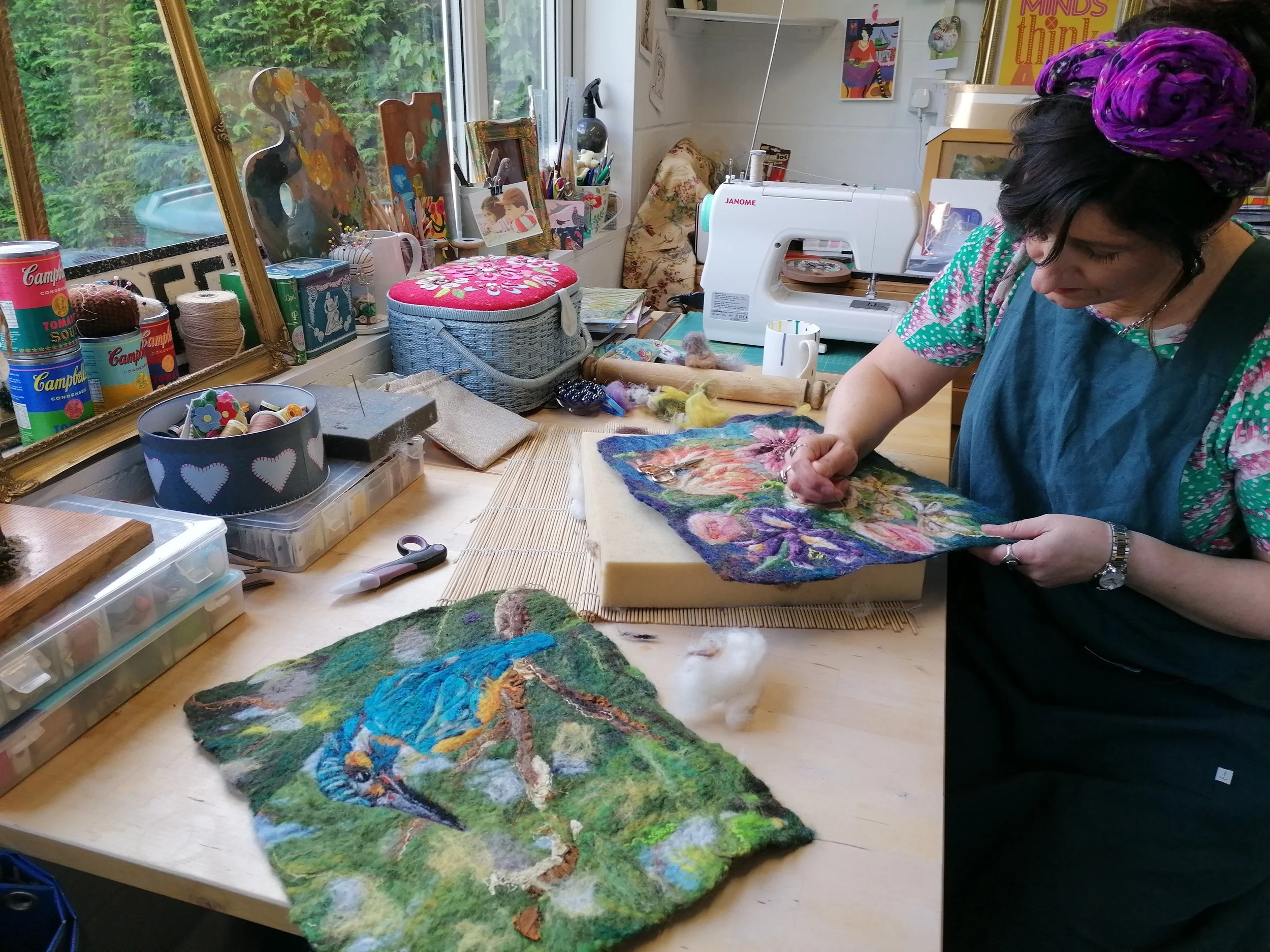
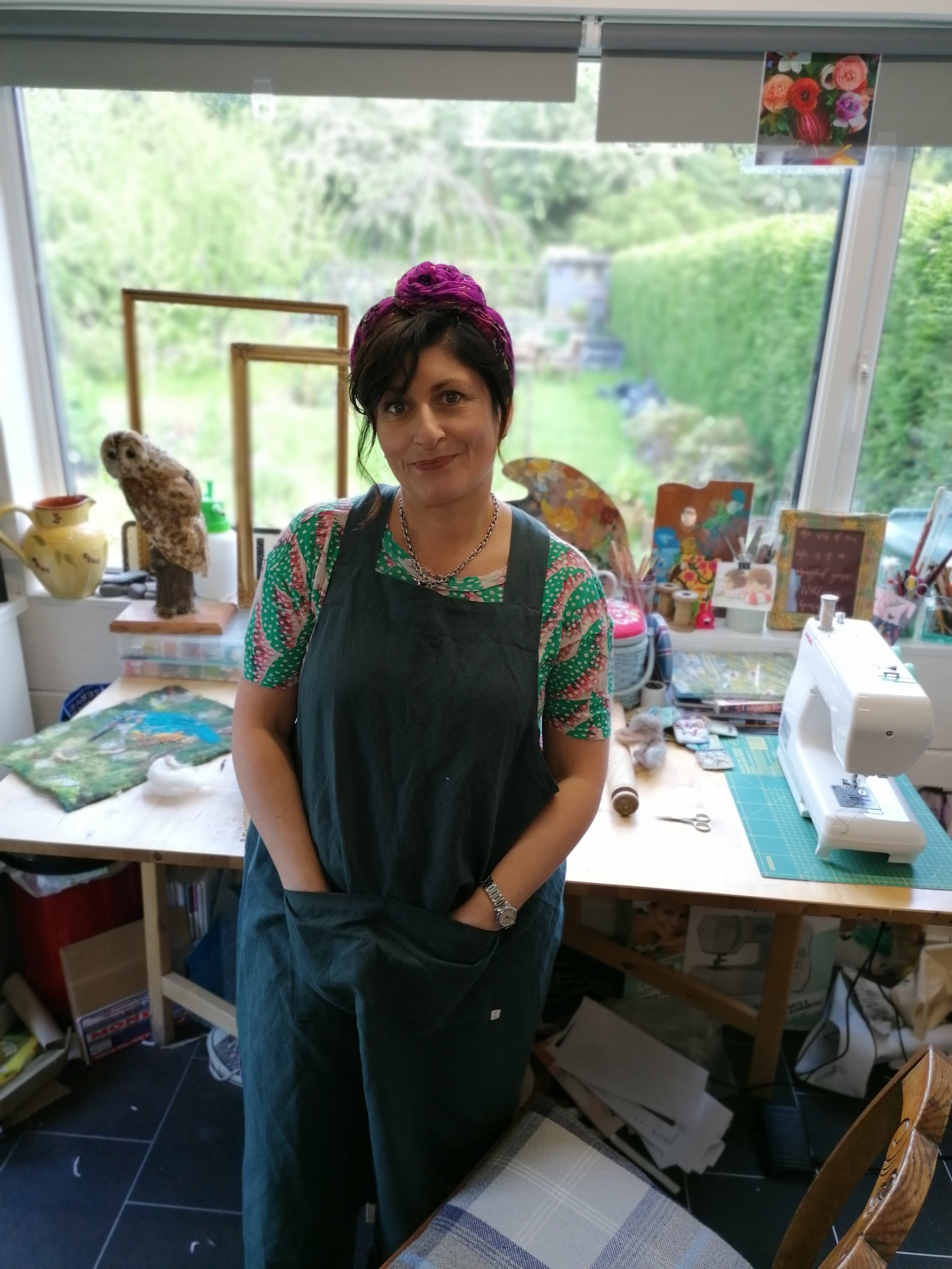
Lynne lives and works in North Yorkshire.
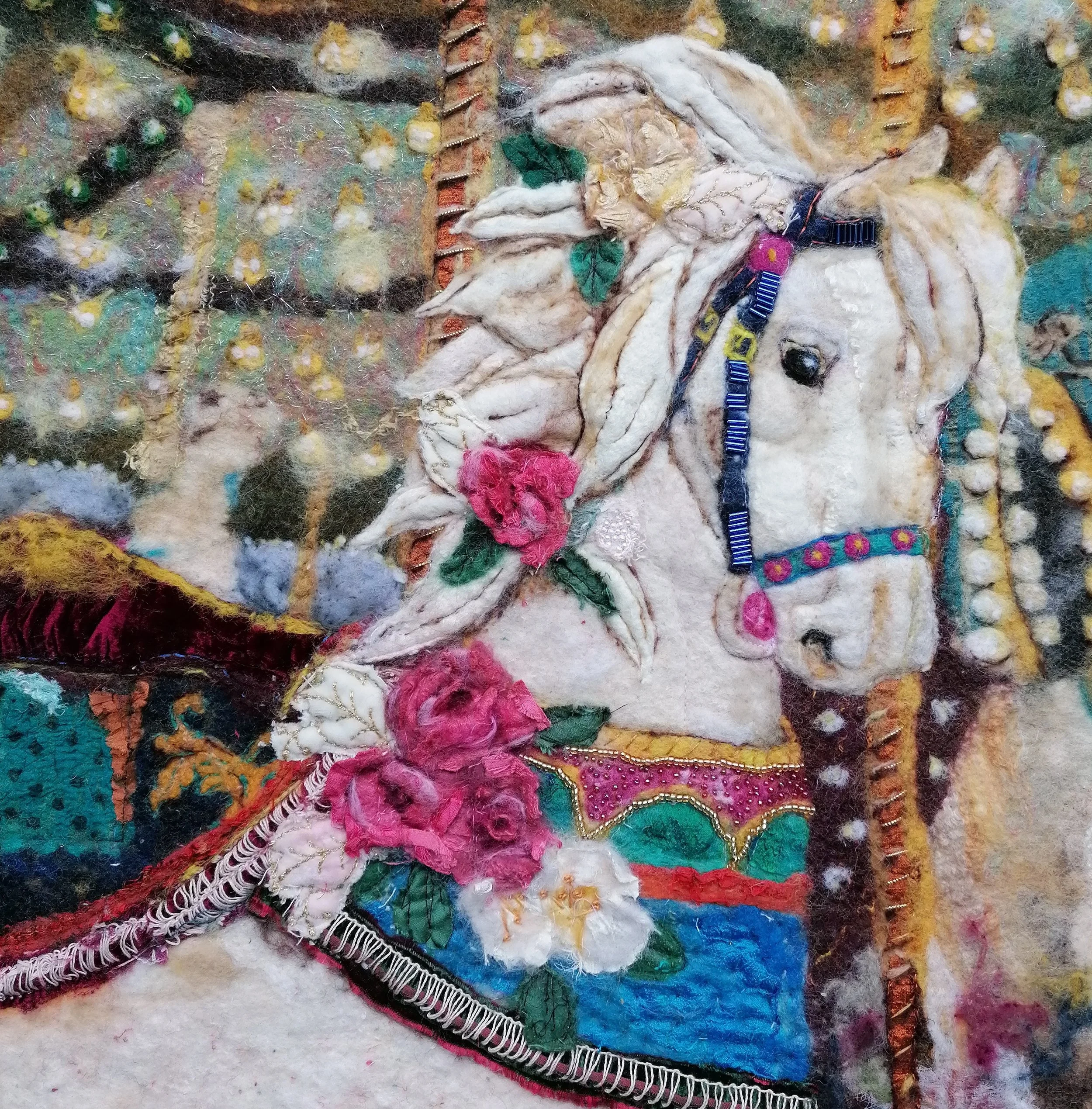
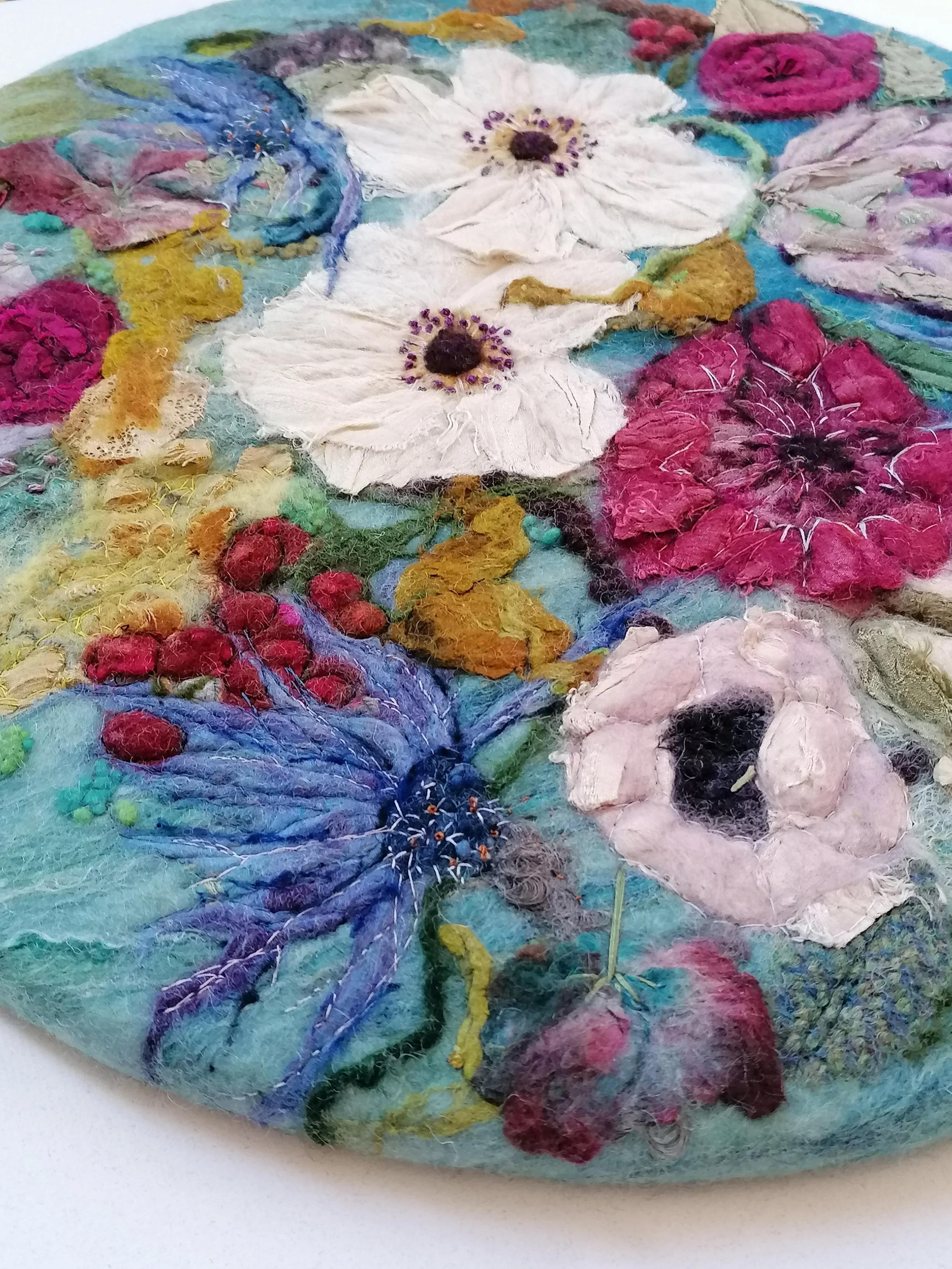
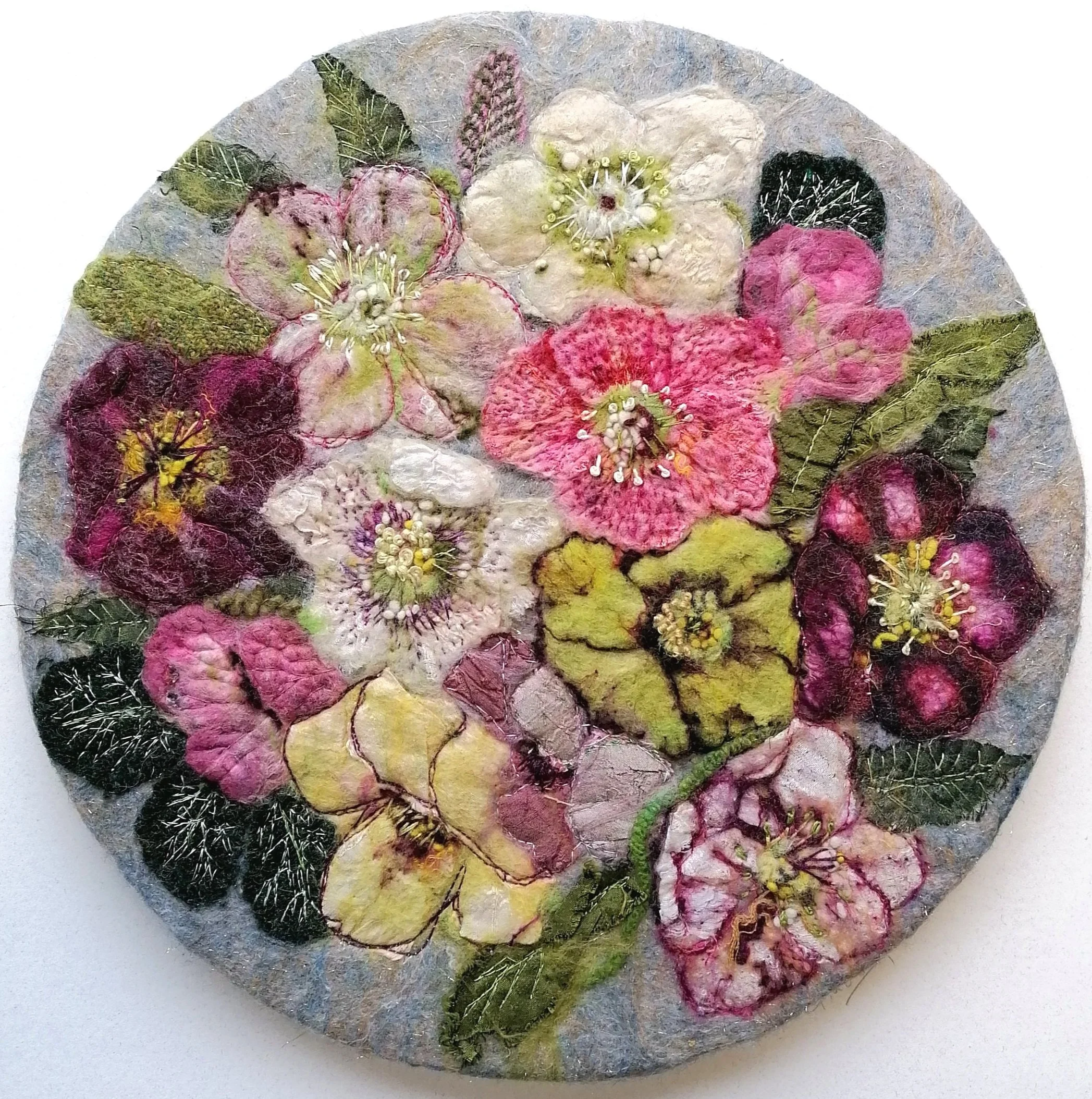
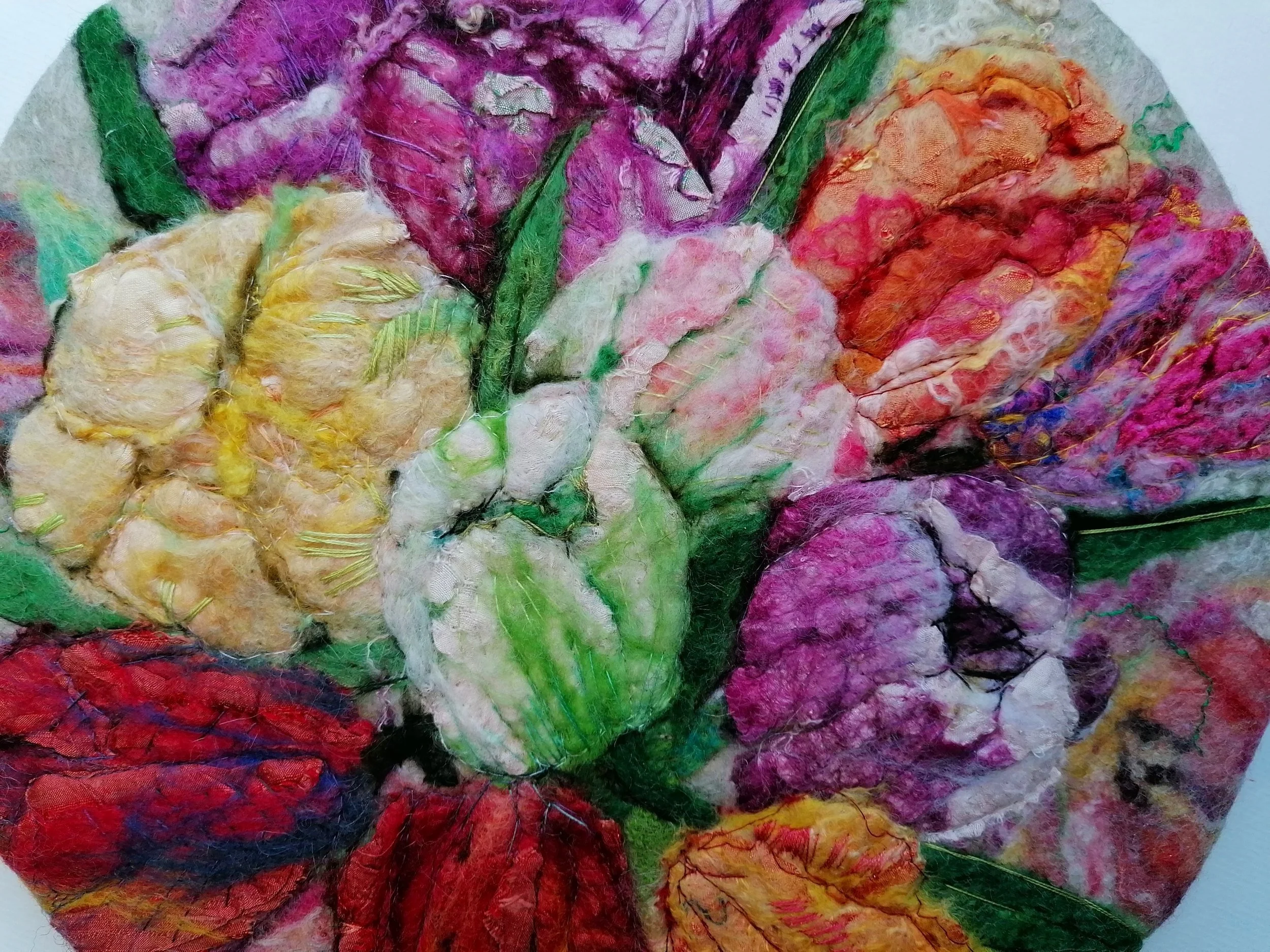
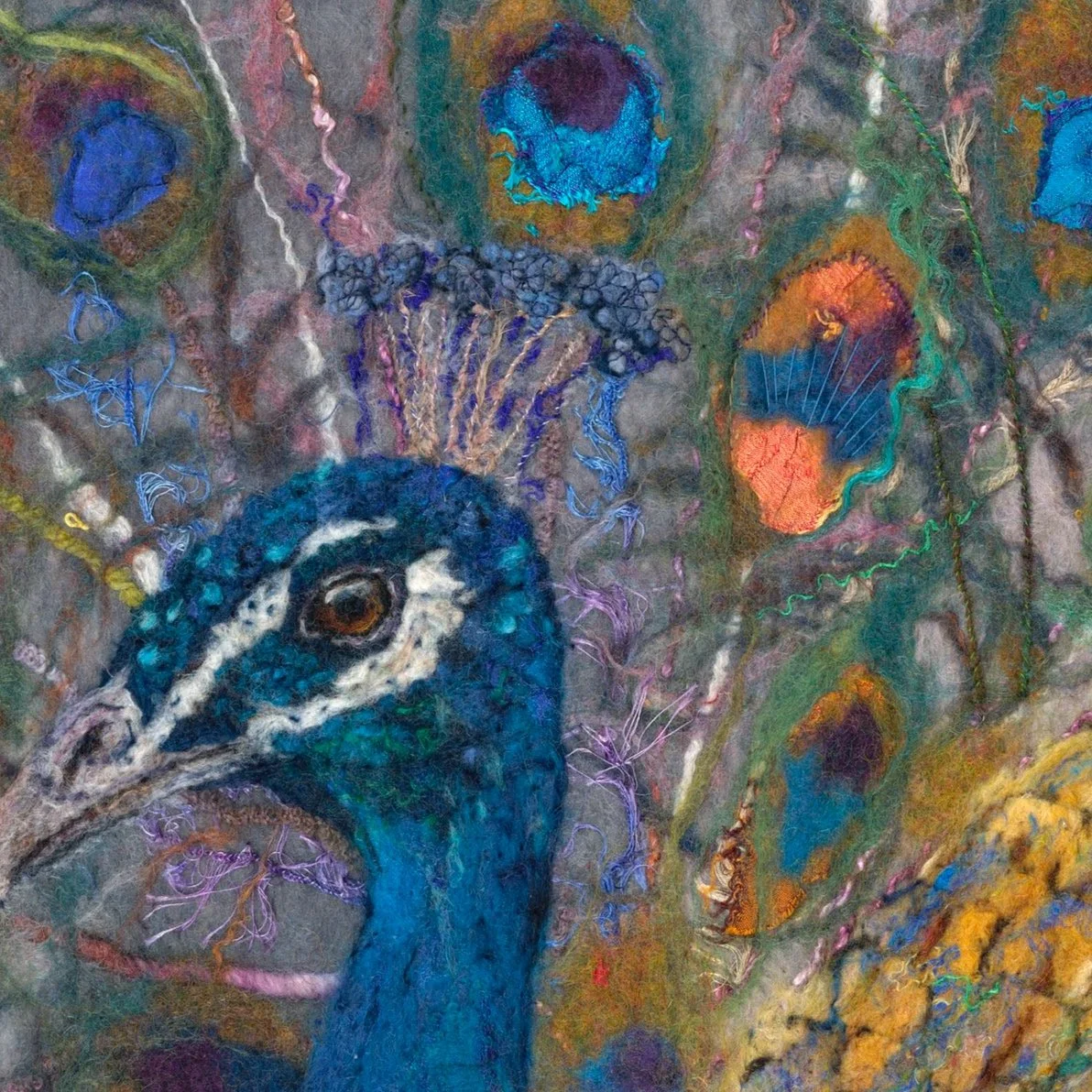
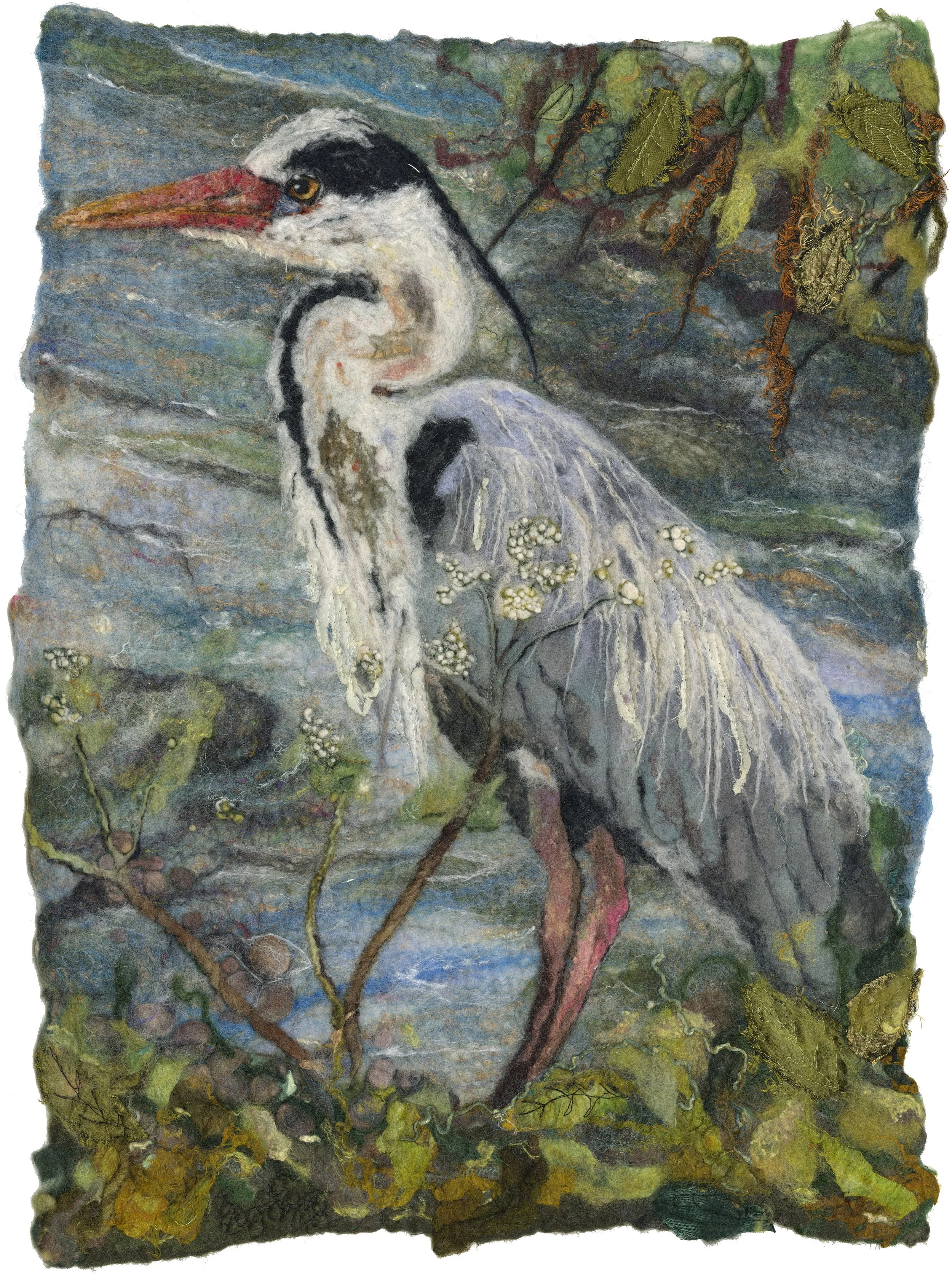
Lynne’s artwork combines a variety of techniques, particularly felting, embroidery, and the use of mixed media. The media that she uses are mostly natural - wool and silk - but also incorporate recycled fabrics. The artworks she creates are inspired by a mix of the natural, the fabricated, and the human. Her work often includes details of flowers, drawing both from life and from the history of art, inspired by the rich representations found in classical, floral still life. Her art often includes portraits, usually representing faces of modern women set against these luscious backgrounds. These women are strong, independent, reflective.
Wet felting is a fluid technique, and creating life-like pieces using this unpredictable approach is a challenging process. The artwork is more instinctive than planned, as Lynne works on each piece.
What is Felt Art?
Felt art begins with natural wool fibres. Strands of coloured merino wool are laid out on a bamboo mat, to create the vibrant blended backgrounds seen in all of Lynne’s artwork. The colours start off blocky, but the fibres are teased and blended by hand to create new colours and gradients. This forms the base, or canvas, of the artwork.
Next, more detail is added on the background layer. Flowers are made by twisting and shaping wool fibres, and different textures are introduced through adding threads of silk. Lynne often stretches the boundaries of traditional felt-making, including scraps of material or found objects to add interesting depth and texture to her work. This is the most malleable stage of the felting process, and images can be moved and reshaped until the piece comes together.
Once the layout is complete, the piece is then wet felted. This is where the wool fibres are soaked with warm water and olive oil flakes and covered with Tuile netting. The wool is massaged until the fibres are fused. The fused piece is then rolled and rotated several times until the felt has shrunk down and been shaped. The felt is rinsed in cold then hot water, and finally left to dry.
Needle felting is another way of creating felt. Small pieces of wool are jabbed with a barbed needle into the felted background. This adds more depth to the image, creating highlights and shadow, depth and tone.
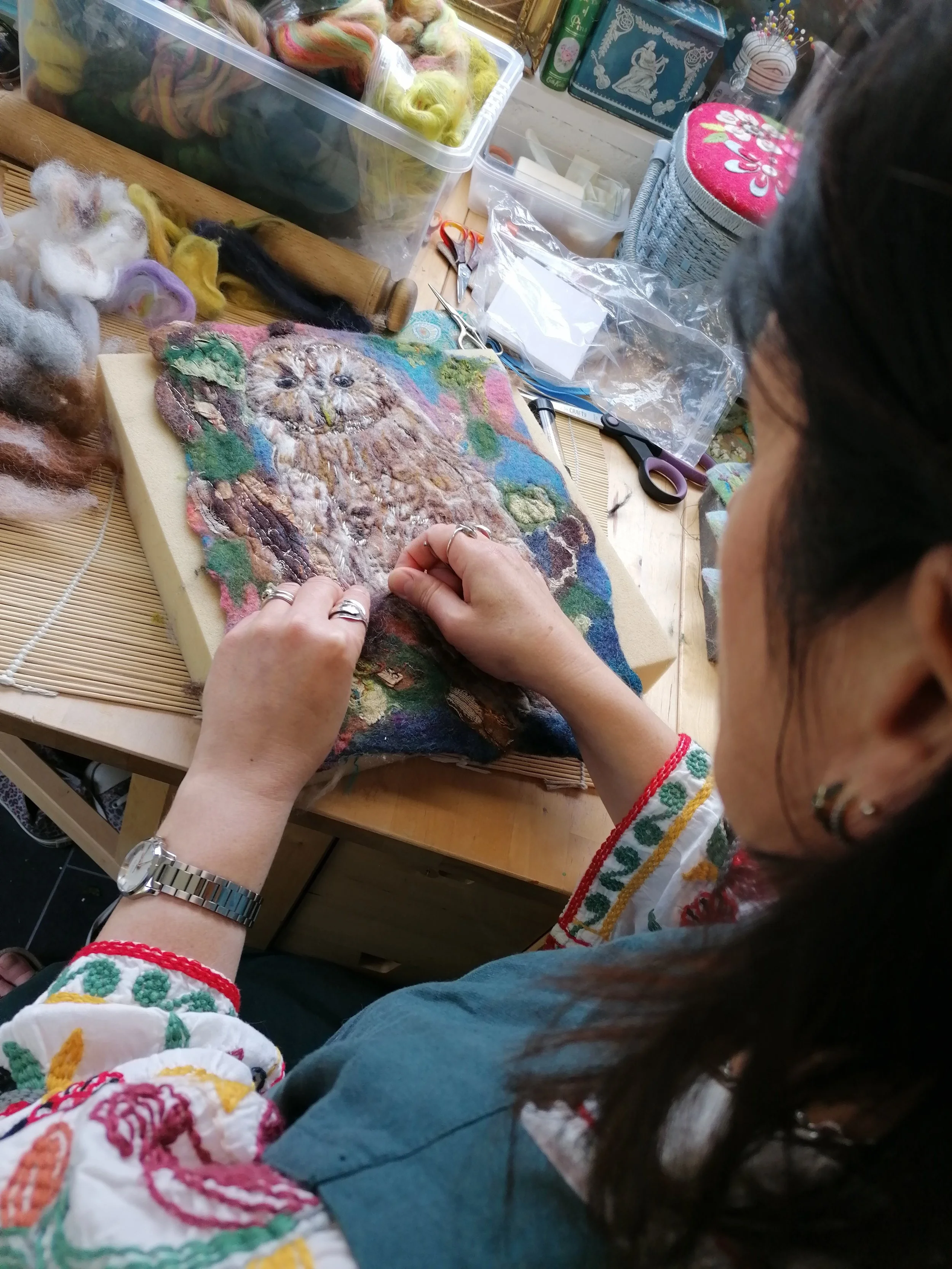
Interfacing is then added to the back of the felt canvas, so that it can be easily maneuvered for free motion machine stitching. Different coloured threads are used to give definition and outline to the images.
Finally, the decorative elements and adornments are added with hand embroidery. This allows for a more diverse range of decoration - embroidery threads, silk, metallic threads, beading and more.